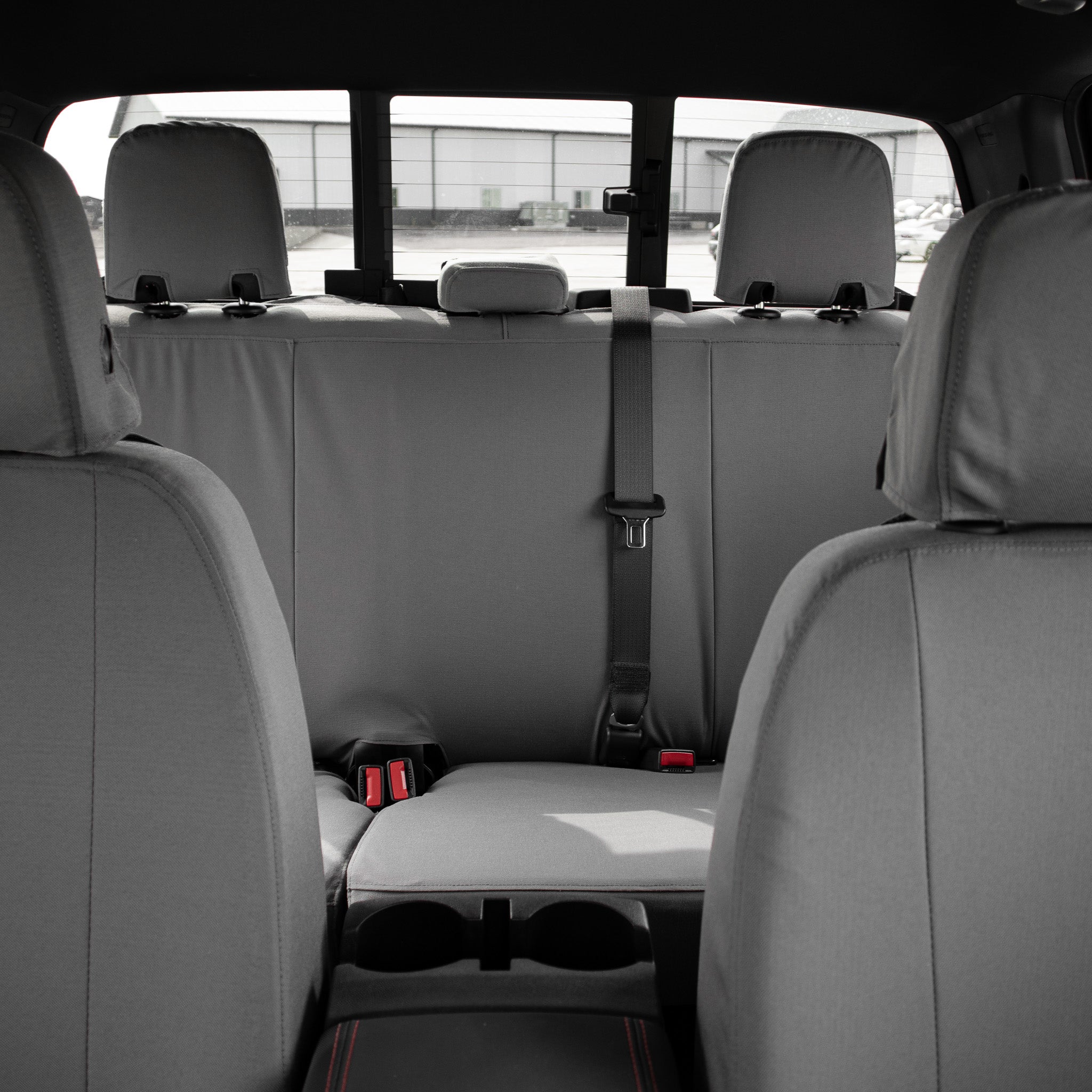
Considering seat covers for your vehicle's leather seats? It's a decision many drivers think about. Leather is a premium material that demands thoughtful care, and the pressing question is whether seat covers help or harm leather seats.
For the most part, no, seat covers won't ruin your leather seats.
They're generally seen as a protective layer, guarding against daily wear and tear, spills, and sun damage. However, not every seat cover is suitable for leather. Some may negatively impact the material over time, like the ones that can trap moisture and adhere to the leather.
Understanding Leather Seats and Seat Covers
While those leather seats are pretty sturdy on their own, they can absolutely benefit from the extra protection that seat covers bring. It's all about keeping them in prime condition for as long as possible, and that's a job seat covers do pretty well, if we say so ourselves.
Leather seats are tough yet tender
Leather's durable, but it's not invincible. Constant sun exposure, the daily in-and-out, and the occasional coffee spill can leave leather looking worn and faded. Leather is also porous, so it absorbs spills, odors, and oils over time and needs some regular care to stay in tip-top shape.
Seat covers are your leather seat’s BFF
Think of seat covers as a shield for your leather: they keep the bad stuff (UV rays, spills, dirt, grease, pet hair) off your seats while still allowing the leather to breathe. The right seat cover protects your leather from the everyday abuse that ages it fastest, helping you preserve both the look and the resale value of your vehicle.
Do Seat Covers Protect Leather?
Yes, the right ones do. Seat covers are one of the best ways to protect leather seats. Here's what they guard against:
-
UV damage: Prolonged sun exposure causes leather to dry out, crack, and fade. A quality seat cover blocks UV rays entirely.
-
Spills and stains: Leather is porous and difficult to deep-clean. A seat cover takes the hit so your leather doesn't have to.
-
Wear and friction: Daily in-and-out causes surface abrasion over time. Seat covers absorb that friction instead.
-
Pet scratches: Claws and nails can quickly scratch or puncture leather. A tough fabric cover is a much cheaper fix than reupholstering.
You need to choose a cover that doesn't trap moisture, doesn't chemically react with your leather's finish, and fits well enough that it doesn't shift and create friction underneath.
How to Protect Leather Car Seats
Here are the best practices to maintain your leather seats:
-
Clean your seats before installing covers. Dirt or moisture trapped under a seat cover can cause mold, mildew, and accelerated wear. Give your leather a thorough clean and let it dry completely first.
-
Choose breathable materials. Seat covers made from breathable fabrics (like high-quality canvas or CORDURA) allow air circulation so moisture doesn't get trapped against the leather.
-
Avoid foam-backed covers on freshly conditioned leather. If your leather was recently conditioned, wait a few days before installing foam-backed seat covers. The conditioner and foam can react in ways that damage both the cover and the leather's surface finish.
-
Ensure a proper fit. A loose seat cover shifts around and creates friction which is exactly what you're trying to avoid. Choose covers designed for your specific make and model.
What are the best seat cover materials for leather seats?
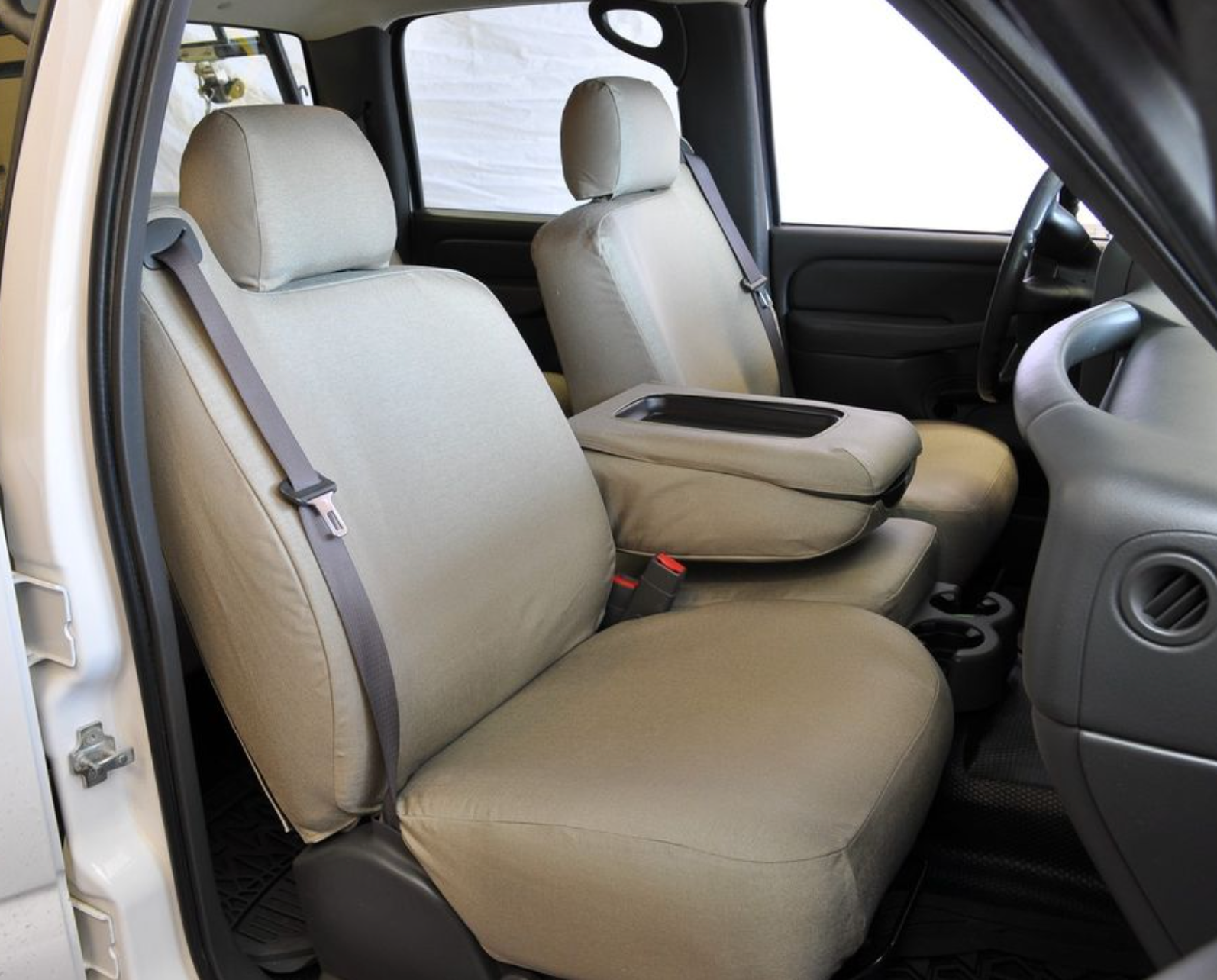
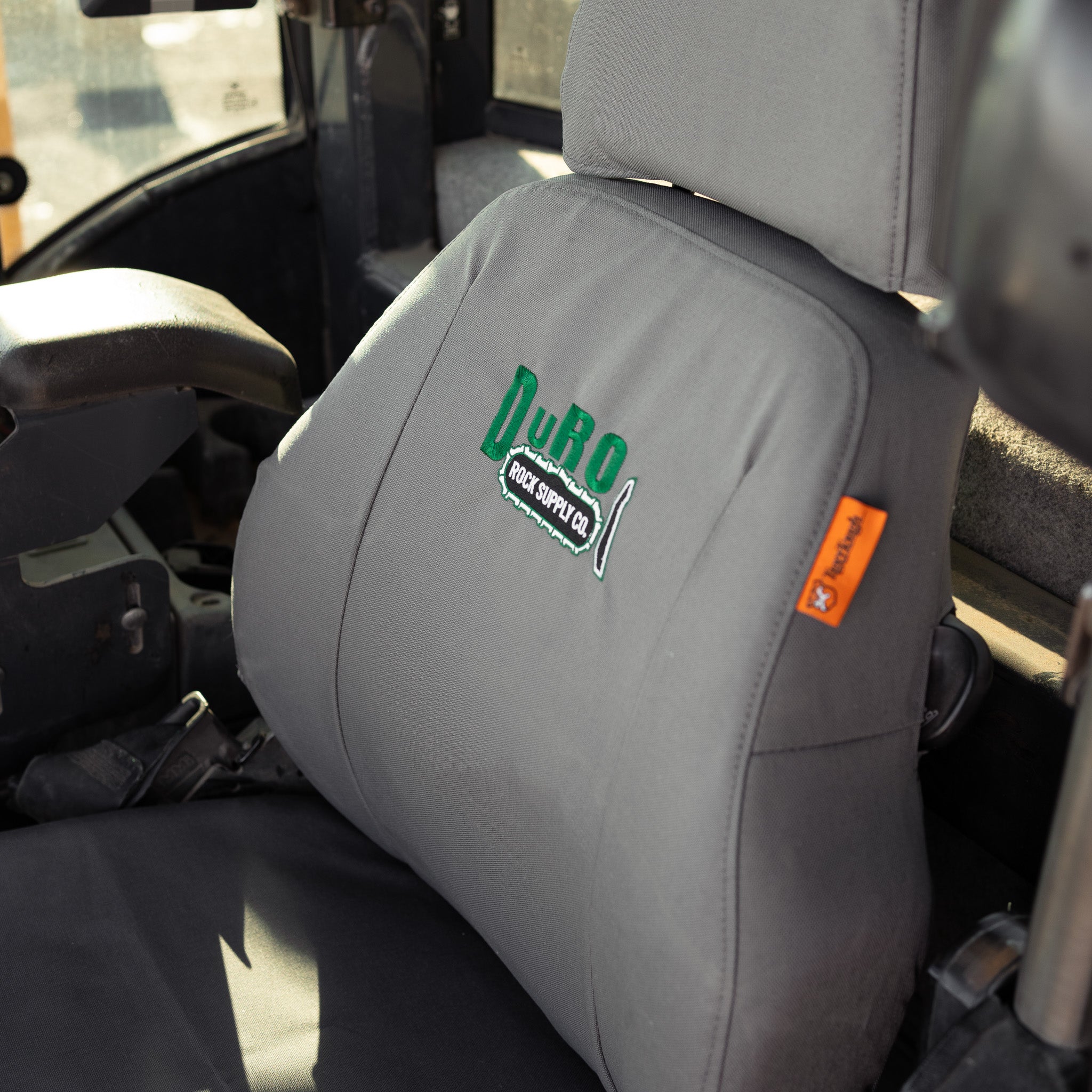
The best overall choice for leather seats is heavy-duty canvas or woven fabric. Tough woven fabrics like TigerTough's seat covers are breathable, durable, and won't chemically react with leather. They sit against the seat without trapping heat or moisture, and they're machine washable, which makes them easy to maintain. If you're using your vehicle for work or hauling gear regularly, this is the go-to.
Our favorite seat cover brands for leather seats are:
-
TigerTough (obviously)
-
Carhartt
-
Marathon
-
Northwest
Materials to avoid on leather seats
These are our opinions, backed by a few facts. We absolutely suggest doing your own research to determine what you’re comfortable with.
Neoprene Seat Covers
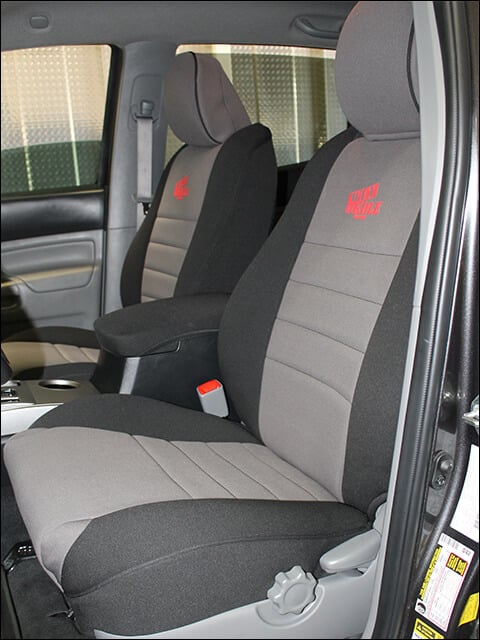
A solid option for active or outdoor use. Neoprene is waterproof and easy to wipe down, which makes it popular for off-roaders and water sports enthusiasts. The tradeoff: Neoprene is less breathable than woven fabric, so it can trap more heat in hot climates. It's generally safe for leather as long as it's installed on clean, dry seats, but if you’re not one to baby your truck or your seats, maybe avoid neoprene.
Faux leather or leatherette seat covers
A lot of people like the way these look, and they’re easy to wipe clean, but they're not the best choice for protecting genuine leather underneath. Leatherette doesn't breathe, so over time it can trap heat and humidity against your leather seats. Better for aesthetic upgrades on cloth seats than for protecting premium leather.
Cheap Foam-Backed Covers
Low-cost foam-backed covers are the most likely to cause problems on leather. The foam backing can interact with leather conditioners and UV-protectant treatments, potentially degrading both materials. If you're going foam-backed, make sure your leather hasn't been recently treated.
Seat Covers on Heated Leather Seats
One of the most common questions we get with leather seats: can you put seat covers on heated leather seats?
Yes, in most cases, seat covers are safe to use with heated leather seats. Here's what to keep in mind:
-
Check the seat cover material. Thinner, more breathable fabrics transfer heat more efficiently. Very thick or insulating materials may reduce how well you feel the heat, but they won't damage the heating element.
-
Never use seat covers that aren't designed for heated seats on seats you regularly heat. The repeated heat cycles can cause ill-fitting covers to shift, bunch, or wear unevenly.
-
Avoid covers with metal hardware near the seat surface. Metal components like rivets can become uncomfortably hot and potentially scratch leather when the seat heats up.
We put various materials to the test in the dead of winter to see which ones worked best with heated seats. Check out the test results.
Frequently Asked Questions
Will seat covers damage leather seats?
No. Quality seat covers protect leather seats rather than damaging them. The risk comes from using the wrong type of cover (like foam-backed covers on freshly conditioned leather) or installing them over dirty, damp seats.
Do seat covers protect leather from cracking?
Yes. UV exposure is one of the leading causes of leather cracking and fading. A seat cover blocks sunlight entirely, dramatically slowing the aging process.
Can you put seat covers on leather heated seats?
Yes, seat covers are generally safe for heated leather seats. Choose breathable, properly fitting covers and avoid thick insulating materials that block heat transfer.
What type of seat covers are best for leather seats?
Breathable, woven fabric seat covers are the best choice for leather. They protect against spills, UV, and wear without trapping moisture or heat against the leather surface.
Protect your leather seats
Seat covers and leather seats are a great combination, as long as you choose the right cover. Look for breathability, a proper fit, and clean installation. Skip the cheap foam-backed options, and you'll find that seat covers are one of the best investments you can make in protecting your leather's long-term condition and your vehicle's resale value.
Ready to protect your leather seats?