Learning Center

Best Work Truck Seat Covers of 2026
Laura Meyer

Best Work Truck Seat Covers of 2026

When we researched top seat covers for work trucks, we didn’t just pick the ones at the top of Google. We asked blue-collar men and women what kinds of covers they’ve tried in their trucks, and this is the list they came up with:

Covercraft Endura PrecisionFit
Covercraft Carhartt SeatSavers
Wet Okole
Marathon
Canvasback
ShearComfort CORDURA®
VERTEX OFF-ROAD
TigerTough

Since we’re comparing covers for work trucks, we used a 2023 Ford F150 regular cab for pricing and research. Let’s get right into highlighting these seat-savers.

Note: Covercraft regularly adjusts its ARV to reflect different sales percentages. The prices we show here are their retail prices at the time of publication.

Covercraft Endura PrecisionFit

Covercraft Endura PrecisionFit seat covers in black
Covercraft Endura PrecisionFit seat covers. Source: Covercraft

It’s nearly impossible to Google truck seat covers without Covercraft popping up. We give them credit. They’ve been in the business for over 50 years and have a great product with a stellar reputation. 

They make seat covers and covers for cars, boats, RVs, airplanes, and patio furniture. First, let's take a look at the Endura PrecisionFit

The fabric for the Endura PrecisionFit is vague. According to the description, it’s a canvas-nylon-polyester blend. But what does that mean? We contacted customer service to learn more, and they didn’t elaborate beyond the product description. It’s tough to know how durable their covers are without knowing more about the fabric. 

Price: $334

Pros

✅ Waterproof

✅ Airbag-safe

✅ Works with heated and cooled seats

✅ Fits factory seats perfectly 

Cons

❌ Fabric is uncertain

❌ Only a limited warranty available

Verdict

This is a great seat cover, and we don’t think you’ll be disappointed. But it’s at the top of the price range for a set of bucket seat covers for a 2023 Ford F150 Regular Cab. If you can get them on sale, they might be a worthwhile investment, but we can’t say for how long without knowing more about their material.

Covercraft Carhartt SeatSavers

Covercraft Carhartt car seat covers
Covercraft Carhartt Seat Savers. Source: Covercraft

Everyone loves Carhartt. We get it. Their reputation is undeniable. They've got that classic look of your grandpa's favorite jacket; overall, we feel nostalgic about them. The brand has been around since 1889 even though Covercraft Carhartt SeatSavers are newer to the market, so let's look at how these cover stand up to some others.

Price: $379

Pros

✅ Great reputation

✅ You know exactly what you're going to get

✅ Air-bag safe

Cons

❌ Limited colors

❌ Not waterproof

❌ They don't stay in place

Not as durable as other seat covers

Verdict

While we have a lot of respect for Carhartt, when it comes to choosing seat covers, we’d actually lean towards Covercraft’s Endura PrecisionFit over the Carhartt SeatSavers. It's not just about the price; the PrecisionFit covers just seem to fit better and provide more value. If you’re into a variety of colors, you might find the two-color options of these covers a bit limiting. And the two-piece design? It tends to slide around on the seat because of how it's fastened. Since these are an expensive choice, we really hoped for a bit more from them.

Read Covercraft Carhartt vs. TigerTough Seat Covers

Wet Okole
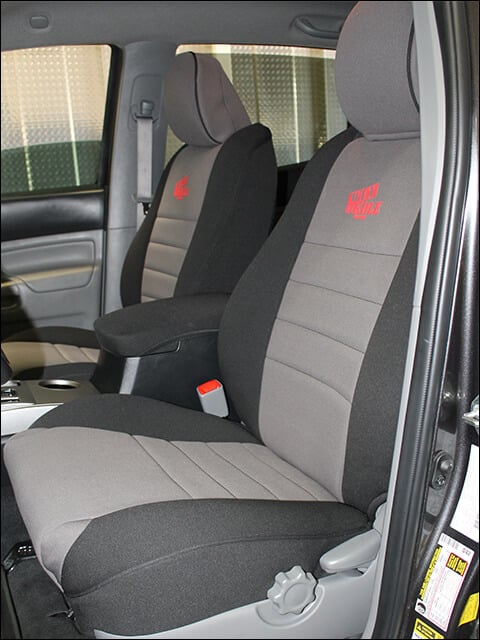
Wet Okole seat covers in gray and black
Wet Okole seat covers. Source: Wet Okole

Okay, we know what you’re thinking…this is about work truck seat covers, and most of us aren’t driving around Baywatch trucks. Yep, this is a wet suit in seat cover form. We didn’t think it would be a fair comparison either, but after hearing from multiple people in the construction industry who love their Wet Okole seat covers, we decided to give these a fair shake.

Since they’re made from wetsuit neoprene and bonded with nylon, they’re waterproof and totally safe on vehicle seats. We'll take a look at their standard seat covers without a console cover.

Brent Fox, a contractor in the Nashville area, can speak to the durability. "I had Wet Okole in the truck I just retired. Rode on them for 12 years and, at some point, sent them back for a refurb. They were a great product and an easy company to work with."

Price: $402

Pros

✅ Easily washable

✅ Self-extinguishing 

✅ Airbag safe

Cons

❌ Only a 90-day warranty

❌ No returns accepted

Verdict

These seat covers really do a solid job of protecting the seats in your work truck, almost like a wetsuit, and you can even clean them with wetsuit shampoo. They’re self-extinguishing, which is a big plus if you ever find yourself dealing with flames inside your truck. Plus, they're designed to be airbag-safe because they don’t cover the side of the seat where the airbag is located. Airbag safety is a must for us.

At first, we were a bit skeptical, but these covers have received great reviews. We really appreciate the custom fit and how easy they are to clean. However, at $374 a pair, they’re not exactly budget-friendly, and the very limited warranty makes us a bit hesitant to give them our full endorsement.

Read Wet Okole vs. TigerTough Seat Covers

Marathon
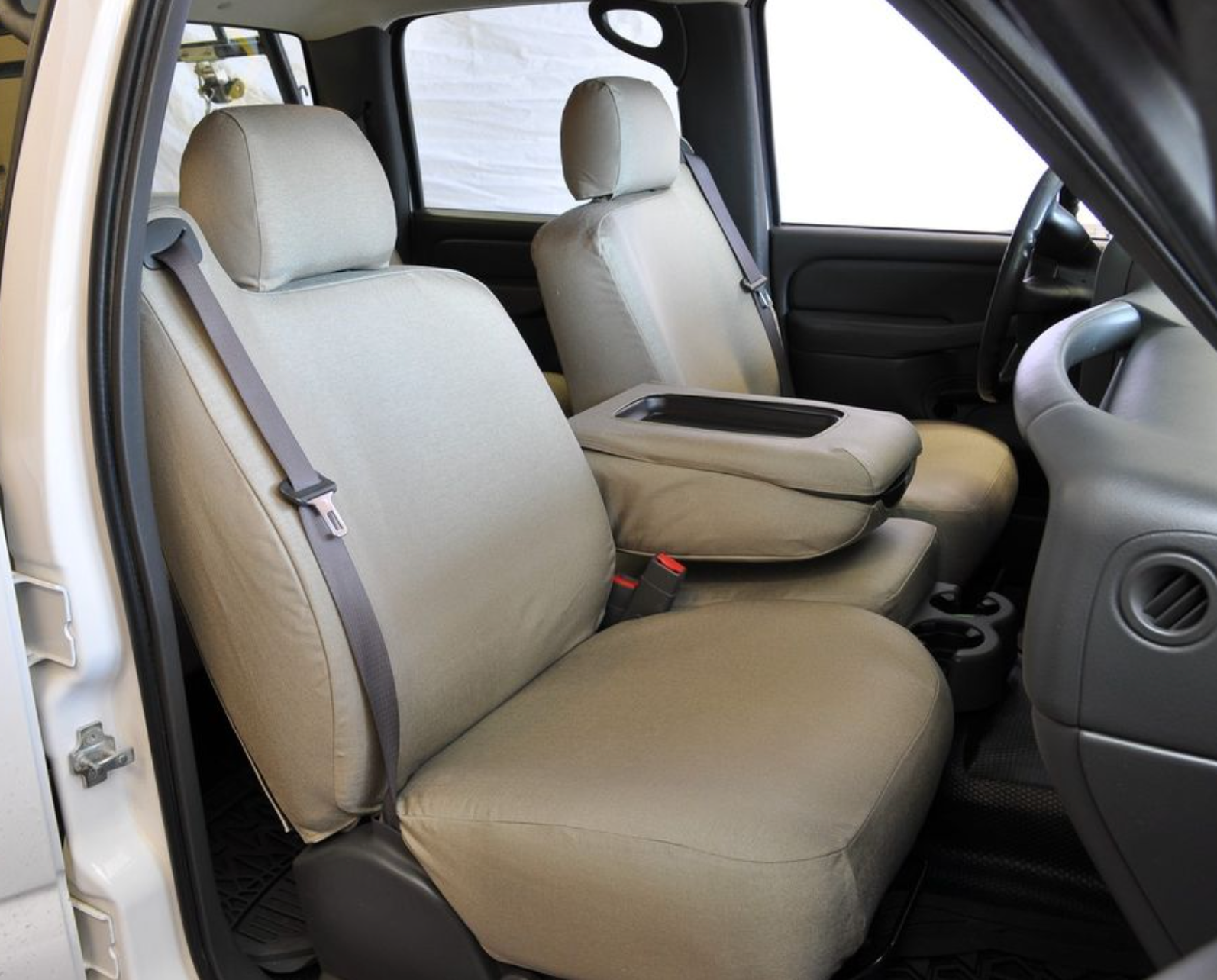
Marathon Seat Cover

We'll just come out and say it: Marathon used to make a darn good seat cover. But since Covercraft bought them out, the quality has gone downhill. We did a side-by-side comparison of old vs new Marathon seat covers so you can see what we're talking about.

Their covers are made from 1000-denier CORDURA® and we'll take a look at their Excel covers for pricing comparison.

Price: $350

Pros

✅ Lots of colors

✅ Made from CORDURA®

✅ Waterproof

✅ Airbag safe

✅ Many customizable options

Cons

❌ Not made in America

❌ Reports of poor quality since switching manufacturers

Verdict

If you can find old Marathon seats, buy them. They'll be a great investment in protecting your truck.

Read Marathon vs. TigerTough Seat Covers

Canvasback
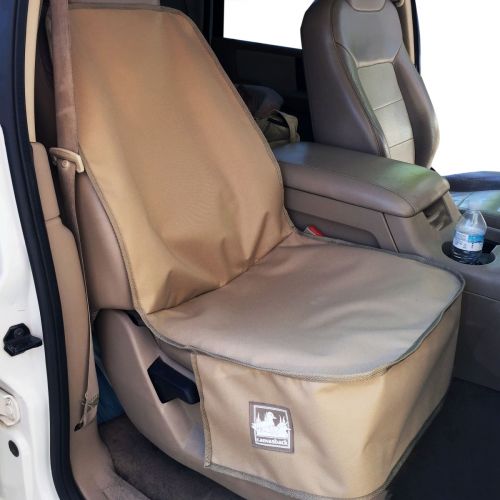
Canvasback Universal Fit seat covers. Source: Canvasback

We won’t lie; we hadn’t heard of this brand until Ambre Schaffer, Marketing Director at Aggtrans, pointed them out. These seat covers are a one-size-fits-most style, so consider that when ordering. You won’t be getting a custom fit for your seats.

Canvasback seems to be best known for their cargo liners. Liners are custom fit for your vehicle’s cargo space and attach with hook and loop.

Ambre confirms the durability and easy installation, “[the cargo liner] is custom fit to your specific vehicle and velcros right in place. They've been installed for three years without budging or showing any signs of wear. If I needed to remove them, they'd pull right up.

"In addition to carrying around all of my photography/videography gear and field gear for construction, I'm a search and rescue handler with a k9. We're usually covered in mud and debris.” 

With a review like that, we had to include this option.

Price: $150

Pros

Durable cargo liners customized to fit most vehicles. Despite not having custom-fit seat covers, the covers are at the bottom of our price range at $140 for a pair of bucket seat covers. On top of all this, Canvasback is woman-owned, and we think that’s pretty cool.

✅ Inexpensive

✅ Fits most vehicles

✅ Woman-owned company

Cons

❌ Not custom fit

❌ Limited six-month warranty

Verdict

We probably wouldn’t put these in a work truck to protect the seats, but we like the cargo liner options. If you’ve got a dog or use your cargo space a good deal, we’d suggest looking into Canvasback. Plus, we can’t help but love that they’re made in Minnesota.

ShearComfort CORDURA® 

ShearComfort CORDURA® seat covers in black and gra
ShearComfort CORDURA® seat covers. Source: ShearComfort

Like TigerTough, these covers are made from CORDURA®. It’s a slightly different kind, though. ShearComfort uses a heavy-duty 500 denier CORDURA® fabric, which isn’t as durable as the 1000 Denier CORDURA® we use. But this is still going to be a durable seat cover.

Price: $428

Pros

These airbag-safe seat covers are waterproof, durable, and guaranteed to fit perfectly. There’s a lot to love about them, and they’d perform well in a work truck.

✅ Waterproof

✅ Guaranteed perfect fit

✅ Airbag safe


Cons

❌ They don't use CORDURA® on their entire seat cover

❌ Price is a little high

❌ Limited Warranty

Verdict

They’re tough and built for hard work, but we don't love that ShearComfort doesn't use CORDURA® on the entire seat cover. They only use it on the portions you'd touch when sitting in the seat. The rest is made of a thin, stretchy material which will give out over time. They have great reviews from their customers. ShearComfort is a good option for your work truck, but not the best.

Read ShearComfort CORDURA® 1000 Denier Xtra-Duty vs. TigerTough Seat Covers

VERTEX OFF-ROAD

VERTEX OFF-ROAD is a newer company, started in 2021, and they specialize in truck seat covers. They consider themselves "American craftsman and enthusiasts committed to building top-quality products that help you upgrade and protect your truck for everywhere the road ahead takes you."

Well, what's not to love about that? Let's look at their 1000-Denier CORDURA® Canvas seat covers.

Price: $400

Pros

✅ Use CORDURA® nylon on their colvers

✅ Automatically include a center console cover

✅ Lifetime warranty, albeit limited

✅ Airbag safe


Cons

❌ Foam-backed seat covers (foam breaks down over time)

❌ Limited vehicle line

Verdict

We love that they're using CORDURA® nylon canvas for this particular cover. They also automatically include a center console cover and pockets for the seatbacks. They also have a lifetime warranty and seem pretty flexible, but it does exclude everyday wear and tear. 

This is the first time we've run across another brand that uses a string to cinch around the seat for a secure fit. It's just too bad they don't use StringLock.

This seems like a great cover. These are going to be a durable option for your truck. And given that they come with a center console cover and seatback pockets, the price is fair for what you get.

TigerTough

TigerTough seat covers in gray
TigerTough seat covers

TigerTough seat covers are designed for hardworking men and women. They’re extremely tough (hence the name).

We put our seat covers through torture tests. Do we do these tests for fun? Yes. Do we love proving how resilient these covers are with each test? Also yes. 

Need more proof that we believe in our products? We have an unconditional warranty for at least two years on our products. They’ll get gross, they’ll get stained, but they won’t fail you, and neither will we.

Price: $317

Pros

✅ Unconditional warranty

✅ Custom fit

✅ Two-week turnaround

✅ Waterproof

✅ Airbag safe

Cons

❌ Limited colors

Verdict 

These are some of the lowest-priced seat covers in this lineup, with an average 4.9 star rating from users. Everyone from parents to first responders uses TigerTough seat covers, and they’ve always risen to the occasion. 

Of course we love our own seat covers (or we wouldn’t work here). But that doesn’t mean they’re best for you and your work truck. Look at all the options and choose the covers that fit you best. 

Summary

Not all seat covers are created equally. Some will be better for you than others. We think you should have ones that:

  • Are waterproof
  • Easy to clean
  • Have a great warranty and return policy
  • Made in America

You don’t want to be stuck with seat covers that aren’t getting the job done. You want something that will last for years and ultimately save you money in the long run.

Look at the features of all these work truck seat covers and decide which one is best for you based on your needs and budget.

Covercraft Endura PrecisionFit Covercraft Carhartt SeatSavers Wet Okole Marathon Canvasback ShearComfort CORDURA® VERTEX OFF-ROAD TigerTough
Cost $334 $379 $402 $350 $150 $428 $400 $317
Star Rating 4.5 4.6 N/A 4.5 4.9 4.6 4.7 4.9
Warranty 3 year limited 3 year limited 90 days 4 year limited 6 months limited 2 years Lifetime Limited Unconditional 2 years
Material Canvas-nylon-polyester blend Duck Weave Cotton Neoprene CORDURA (unknown denier) 600 X 300 poly denier 500 Denier CORDURA® 1000 Denier CORDURA® nylon canvas  1000 Denier CORDURA®️
Fit Custom Custom Custom Custom Universal Fit Perfect Fit Perfect Fit Perfect Fit
Waterproof ☑️ ☑️ ☑️ ☑️ ☑️ ☑️
Airbag Safe ☑️ ☑️ ☑️ ☑️ ☑️ ☑️ ☑️ ☑️
Made in the USA USA and Mexico USA and Mexico ☑️ ☑️ ☑️ ☑️ ☑️ ☑️
Colors and Patterns 32 2 40+ 14 11 10 3 8
Seatback Pockets Yes Yes Optional Optional No Yes Yes Optional
All specs based on 2023 Ford F150 Regular Cab Bucket Seats

Update on 07/06/2023: We Initially had WeatherTech Seat Protectors as part of this list but removed them when we found out they weren't considered airbag-compatible in all vehicles. Take a look at WeatherTech Seat Protector Review for more information.

Does CORDURA® tear?

With extreme force, it can. But it doesn’t tear in everyday scenarios. We challenged grown men to try and tear it with all their might, and take a look at their best efforts: 


Fleet managers will ask how our seat covers compare to Carhartt®, so in order to get an unbiased answer, we sent a sample of the 1000-denier CORDURA® fabric we use in our seat covers, along with the cotton duck Carhartt® uses for its seat covers, to TexTest for independent lab testing.

Using the ASTM D4533 Trapezoid Method, TexTest tested the tear resistance of both materials. A cut was made into both samples, and a force was applied to further tear them apart. CORDURA® tore at 100lb of force. The cotton duck tore at 20lb of force, making the CORDURA® 5x stronger than the duck cotton.

Check out the live test:

This isn’t about us comparing ourselves to Carhartt®, per se, but it’s one of the biggest brands out there and known for its durability. So we’re here to tell you that while Carhartt’s material is durable, CORDURA® is rated military-grade and labeled nearly indestructible. 

So yes, while CORDURA® can technically rip, we don’t think it will even rip on you in your daily use, which is why we offer an unconditional warranty on our seat covers. They fail you? We’ll make it right.

Read article

TigerTough vs. Grease: How to get grease out of a seat cover

So does grease come out of TigerTough seat covers? The short answer is...heck yeah it does! Watch this torture test to see what we mean:

Here's what we did:

  • Went to town with a grease gun on a seat cover installed in a vehicle in a TigerTough employee vehicle. 10/10 recommend for fun. 
  • Smeared that grease around for good measure.
  • Tried to wipe off the excess grease with a paper towel, but that just smeared it around more.
  • Sprayed degreaser all over the stain.
  • Scrubbed.
  • Repeated steps 4 and 5.

Boom! The stain came out, and the seat underneath was totally unaffected. We'd recommend washing the affected pieces in the washing machine after removing the stain, just for good measure. Normally we say to wash in cold, but if you're dealing with grease, turn that water to warm.

If you're looking to remove grease stains from upholstered seats (not seat covers) you can try these steps, but we aren't experts so don't blame us if something goes wrong. We'd suggest you clean the seat as best you can, then add seat covers to protect it from future stains.  

Disclaimer: Yes, we tested this on black seat covers, so results may vary based on seat cover color. We only have so many employees willing to let us torture their seats for the sake of content.
Read article

Wet Okole vs. TigerTough Seat Covers

People love their Wet Okole seat covers. There’s a loyal fanbase raving about these American-made, waterproof seat covers.

What's their claim? Seat covers that don't swelter in the summer or freeze in winter, waterproofed, and a fit that's tighter than a new pair of gloves.

They're a competitor we recognize. They're dedicated to enhancing vehicle interiors and protecting them from daily wear and tear. Wet Okole has a rabid following, and at TigerTough, we appreciate good competition.

But we need to take a quick pause to tell you that when we googled what Wet Okole means, we found out that in Hawaiian, it means wet butt. Nope, we didn’t make that up. 

Anyway, we ordered a set for a 2023 Ford F-150 to compare them with TigerTough seat covers.

Let’s do this.

Watch the video review

Packaging

Now, we know this isn’t a factor people consider when ordering seat covers. But it’s still important to note since packaging can give you a glimpse of how a company treats their customers.

Wet Okole Packaging

Wet Okole covers arrived in the largest box we’ve ever received for a single set of seat covers. These covers are bulky on their own, so the box is understandable. It was branded well and came with information about the company and color instructions. 

TigerTough Packaging

TigerTough seat covers ship in a branded poly mailer with full-color instructions specific to your exact vehicle. So, if you ordered covers for a 2018 Toyota Tacoma, you’ll get instructions on installing TigerTough seat covers on a 2018 Toyota Tacoma.

Design and fit of the seat cover

Wet Okole Design and Fit

Wet Okole’s seat covers have nylon-covered neoprene laminated on a half-inch of foam. It’s a thick cover and looks great installed.

The covers come in multiple pieces (we love that!) for the best fit. And thankfully, Wet Okole labels which seat cover goes on the driver’s seat. Does this matter? Absolutely. You need to make sure you have the correct covers in place so the airbag can deploy in the event of a collision.

And bonus: the set we received also included a center console cover.

We like the way the Wet Okole looks. It’s very attractive. However, it’s stiff with that ½” foam backing. If you press on the seat back, you’ll notice gapping between the cover and the seat. This is because the foam isn’t pliable. And after a while, that foam breaks down, and the cover won't fit as nicely.

wet okole backing
Foam backing on a Wet Okole seat cover.

Wet Okole also does a lot of decorative stitching in the seat back. This looks nice, but it makes the fabric weaker.  

TigerTough Design and Fit

TigerTough seat covers come in three pieces and wrap the entire seat, much like Wet Okole, but they are installed differently, which we’ll get into later. 

Our covers are made from 1000-Denier CORDURA® and are proven to withstand intense abuse. There’s no foam backing on our covers, so it hugs the seat. We also don’t have any decorative stitching, except for embroidery, but because that’s in an area with minimal wear, it doesn’t weaken the seat cover like decorative stitching.

"We design for strength first and looks second."

Sheldon Zitzmann, TigerTough Marketing Director

Installation

Wet Okole Installation

It took us approximately 17 minutes to install a Wet Okole cover. We rated these as medium difficulty. The instructions were pretty poor, but because we know seat covers, we knew what to do.

However, we had issues getting one of the straps through. The instructions said that you’d need to possibly remove the plastic molding on your seat to get the strap through. We didn’t want to do that on our boss’s truck, so it took a little longer for us to install.

Wet Okole Instructions

Here’s how their seat covers are attached:

  • One strap running from side to side
  • Two straps running underneath from front to back
  • One loop around the seatbelt plug

TigerTough Installation

TigerTough took us 9 minutes to install on a seat. Yeah, we know our seat covers, so this probably took us a little faster than most people.

We try to be as specific as possible in our instructions and offer installation videos for every vehicle. 

Here’s how TigerTough seat covers are attached:

  • The seat bottom runs all the way along the underside of the seat, attaching to itself with heavy-duty hook & loop.
  • We have our Stringlock that runs around the perimeter of the seat bottom and cinches it like a drawstring around and underneath the seat to ensure it doesn’t shift.

Check out our full installation expectations to learn more.

Headrest

Both seat covers have headrest covers, so that’s a win! They also both tuck into the headrest mounts nicely. There’s not much more to say about that other than if you’re covering your seat, you need to cover the headrest. 

Seat back

Both brands have a custom look for the seat back. They also both have options for custom embroidery and seat back pockets.

Wet Okole Seat Back

We’ve touched on this earlier, but the back (where your back rests up against the seat) of the Wet Okole seat covers have decorative stitching, which looks very attractive but isn’t great for durability. You'll also see the gapping here when you press on the seat cover.

TigerTough Seat Back

Our seat covers fit snugly to the back without any gapping or unnecessary seams.

Seat Crease and Bottom

Since both seat covers are made from multiple pieces, they have clean-looking creases that fit the seats well.

They also both tuck into the seat's plastic trim, allowing access to the seat controls. We like the way TigerTough’s fit more snugly on the bottom half, but if we removed the plastic trim to install the Wet Okole covers as they suggested, we might like that fit more than we do as is.

wet okole and TigerTough seat bottoms

Airbag safety

Quick history lesson: most cars made after 2014 will have side airbags due to federal regulation, many deploying from the seat. The National Highway Traffic Safety Administration estimates that between 1996 and 2012, 2,252 lives were saved by side and curtain airbags–before regulations were even put into place. At that time, only 42% of vehicles on the road were equipped with side airbags. That percentage is much higher now.

We know you take safety seriously, whether it’s in your personal vehicle or if you’re managing a fleet

Wet Okole Airbag Compatibility

We don’t love the way Wet Okole does airbag compatibility with their covers. They have a slit on the side of their seats for the airbag to deploy. But, the slit isn’t as long as the tearaway seam on the factory seat, so we have concerns that an airbag could get stuck during deployment. However, Wet Okole says their seat covers are tested, so we’ll take their word for it.

TigerTough Airbag Compatibility 

Our seat covers have a visible tearaway seam that runs the entire length of the seat. Our covers have been independently tested to ensure that an airbag will deploy in the event of a collision. We hope you never have to find out, but rest assured that our seat covers are deemed safe with airbags.

Wet Okole and TigerTough are both airbag safe.

Waterproofness 

Not all waterproofness (that’s a real word) works the same. This one is best shown in the video, but we’ll break it down here too.

Are Wet Okole seat covers waterproof?

Yes, they are, but they also soak up the water like a little sponge. The seat underneath stays dry. However, if you spill something, your cover will remain wet for a while. You’ll want to blot the seat cover and, if you can, keep the windows open so they’ll dry out.

Otherwise, Wet Okole will live up to their name and leave you with a wet butt.

Are TigerTough seats waterproof?

They are, and they’re also hydrophobic. Does that mean they’re scared of water? Pretty much. They can’t even absorb liquid. 

In the video, you’ll see that the water poured on the TigerTough seat cover beads up and rolls off. So yeah, your floor may get wet if you spill on your seats, but you can wipe up your seat cover and sit on it without worrying about wet pants. 

Warranty and Returns

Wet Okole Warranty and Returns

This is one of our biggest disappointments with this brand. They have a 90-day limited warranty, and it only covers manufacturer defects. In terms of returns, they don’t accept returns if you aren’t happy with your purchase. So you get what you get. 

TigerTough Warranty and Returns

Our vehicle seat covers have a two-year, unconditional warranty. If something happens to your TigerTough seat covers, we’ll replace or repair them. It doesn’t matter how they got damaged; we’ll happily make it right.

If, for some reason, you don’t like your TigerTough seat covers, we’ll accept returns within 30 days of you receiving them. You just need to be sure they’re in like-new condition still.

Price

Seat covers can range from $50 to hundreds of dollars. For comparison, we used a 2023 Ford F-150 covers. 

How much does Wet Okole cost?

We ordered a set of their standard bucket seats. Without the console cover, they cost $392 (that same set is $422 as of August 2026). This is a fair price for seat covers since they can get pretty expensive.

How much does TigerTough cost?

To cover your two front seats with TigerTough, it will cost around $327. There are different options that can increase the cost, but our standard bucket seat covers are $327/pair.

Overview

We like Wet Okole. Not enough to quit our jobs and go work for them, but they have a decent seat cover. But if we were sitting down with you over a beer, we’d probably say that we expected more from Wet Okole based on their cult following, but we don’t doubt that the covers will protect your seats for years.

It all comes down to preference in the end. Both covers are made in America and have great reviews.

If you want fun colors and that beach vibe, Wet Okole would be a great option. We still don’t love their warranty or return policy, though, so be sure you really love them.

If you want something rugged and meant to withstand hard use, like construction equipment or excited farm dogs, we’d encourage you to try TigerTough. After all, if you don’t like our seat covers, you can return them.

Maybe after reading this comparison, neither of these brands appeal to you. Then you should definitely check out the best seat covers for work trucks and find something that meets your needs.

Wet Okole TigerTough
Cost $422 $327
Stars N/A 4.9
Warranty 90 days Unconditional 2 years
Material Neoprene 1000-denier CORDURA®️
Fit Custom Perfect Fit
Waterproof Waterproof Waterproof
Airbag Safe Yes Yes
Colors/Patterns 40+ 8
Made in the USA ☑️ ☑️
Seatback Pockets Optional Optional


Read article

TigerTough vs. Northwest Seat Covers: A Side-by-Side Review

Let’s be clear right up front: this isn’t a roast. It’s not a review. It’s a side-by-side comparison so you can see what you’re getting, what it looks like, how it installs, and how it holds up.

We put TigerTough and Northwest’s heaviest-duty (their Cordura® Pro-Gard™) covers on the same truck. Why? So you can see for yourself what works best for your rig, your job, and your standards.

What Comes in the Box

Northwest’s covers showed up in a basic package and included:

  • A universal install guide with black-and-white illustrations

  • Cordura® Nyco fabric covers (a cotton-nylon blend with a bit of stretch, this one is 74% Cotton, 24% Nylon, 2% Dynamic Yarn

  • Foam-backed seat bottoms and backs

  • A center console cover

  • Headrest covers (not all brands include these, so that’s a win)

TigerTough covers came in a branded bag and included:

  • A custom install guide with full-color photos

  • Links to vehicle-specific install videos

  • Covers made from 100% Cordura®

  • Our signature Stringlock for a no-shift fit

  • Headrest covers

  • No foam backing (more on that in a minute)

Let’s Talk Fabric

Northwest uses a Cordura® blend that’s softer to the touch and backed with foam. That foam helps hide wrinkles, adds a bit of cushion, and gives a polished look right out of the gate.

But that foam? It’s not all upside.

The big downside is what it does to your heated or cooled seats. In our tests, foam-backed covers slowed down heat transfer, and they’ll possibly block airflow from cooled seats. If you’re spending long hours in the cab, comfort matters, and foam can mess with that.

TigerTough covers skip the foam completely. That’s intentional. No foam means your heated and cooled seats actually work. Our fabric is breathable, rugged, and water-resistant. While you may notice some wrinkles at first, they will settle out with use.

Bonus: No foam also means our covers are machine washable. You don’t need to baby them. Beat them up, then throw them in the wash.

Install and Fit

Northwest covers rely on elastic loops, S-hooks, and Velcro. They get the job done, but the fit is looser and relies heavily on foam to keep things looking taut. The seat bottom attaches with plastic buckles and elastic straps that loop under the seat.

TigerTough covers are precision-fitted. The seat bottom wraps fully around and fastens to itself. Side-mounted strings get locked down with our StringLock system, which keeps the cover from sliding when you hop in and out all day. The seat back fits snugly, even around the factory trim, thanks to a full-wrap design.

It’s not just about looking good…it’s about staying put.

Airbag Compatibility

Both brands are airbag-compatible. TigerTough uses a tearaway seam with ultra-low tensile stitching that’s been tested in certified crash labs. The airbag blows right through, just like it should.

Northwest lists MGA Labs as their testing facility too (same as us), but we didn’t find any deployment videos, just one photo, but we’re happy they had that available.

Console Covers

Northwest includes a fixed center console cover, and we’ve got to hand it to them: it looks sharp. But looks aren’t everything. As Sheldon showed, it pops off easily when bumped. Elastic wears out. That’s why we usually skip fixed console covers unless it’s a 40/20/40 style seat that flips up.

Warranty and Returns

Here’s the fine print made easy:

Brand
 
Warranty
Return Policy
TigerTough 2-year unconditional

30-day, no-hassle returns

Northwest 2-year limited (defects, fit, normal wear) 20% restock fee, no returns on sale items

We cover any physical damage (rips, tears, whatever) for 2 years. No fine print, no fuss.

So, which is better?

We’ll let Sheldon have the last word:

“This is a competitor comparison, but I’m not going to go out of my way to make our competitors look bad… What you really should be worried about is how do they look in a year. How do they look in two years?”

No matter which brand you’re eyeing, look for real-world photos. Not staged, not brand new. The goal is to protect your seats (and your investment) for the long haul.

And if you’re ready for covers that are made in the USA, tested in labs and job sites, and backed by a no-nonsense warranty, well…you know where to find us.

Feature
TigerTough
Northwest
Price $317 $331

Made In

USA Canada
Fabric Cordura (100% nylon) Cordura (cotton, nylon, dynamic yarn blend)
Foam Backing No Yes
Airbag Compatible Yes (lab-tested and verified) Yes (lab photo, no video proof)
Seat Type Compatibility Heated & cooled Heated only
Headrest Covers Included Included
Install Instructions Color manual + video Black & white universal guide

Return Policy

30-day, no restocking fee Unspecified timeframe, 20% restocking fee on full-price items, no returns on sale items
Warranty 2-year unconditional warranty 2-year warranty (defects & wear only)
Machine Washable Yes Yes
Read article

Foam-Backed Seat Covers: Are They a Good Idea?

Foam-back seat covers are easy to find, and at first glance, they seem like a smart option. They look great, and the added padding might feel nice when you sit down. But before you throw one in your cart, it’s worth digging a little deeper.

Are foam-back seat covers actually built to last? And do they hold up in real-world conditions?

We’re about to get real nerdy on you. 

What Is Foam Backing Anyway?

When a seat cover is described as "foam-backed," it usually means it has a layer of polyurethane foam stitched or laminated onto the back of the fabric. This foam can range in thickness and density, but the general idea is to add some softness and padding between the cover and the original seat.

At face value, that doesn’t sound so bad. But the reality is, foam doesn’t always behave well under pressure…literally.

Foam Breaks Down Faster Than You Think

Foam might not melt in your truck, but it doesn’t need to catch fire to fall apart.

Polyurethane foam starts breaking down long before it reaches the melting point. Full thermal degradation happens at around 302°F (150°C)—hopefully not a temperature you’re hitting unless your truck’s parked in a volcano. But here’s the catch: your cab doesn’t have to get that hot for damage to start.

In the summer, parked vehicles can easily hit 140°F (60°C) inside. That kind of heat, over time, starts to wear on the foam. It softens. It breaks down. It off-gasses more. And it flat-out doesn’t last.

Here’s what that looks like:

  • The foam softens and stops giving proper support

  • It starts releasing more VOCs (you’ll hear more on that in a sec)

  • The aging process speeds up, shortening its lifespan

  • Eventually, it crumbles (literally)leaving gritty bits under your seat and a saggy, sloppy fit

And that’s not the only way foam messes with your seat. In our own heat tests, we found that foam-backed covers actually block seat heaters. The heat doesn’t get through as well, which means your heated seats don’t feel nearly as warm. So not only does the foam break down in heat, it can also rob you of the heat you want.

So if you’re working in high temps or spending all day in the sun, foam-backed covers just won’t hold up. That’s why we don’t mess with foam. We build covers that survive the same conditions you do…no matter how hot it gets.

What about VOCs? 

Fair question. That “new car smell” everyone talks about? It’s mostly VOCs (volatile organic compounds), off-gassed from materials like polyurethane foam. And while it might smell fancy, it’s not doing your lungs any favors.

According to research published by the Ministry of Environment and Food of Denmark, foam can release things like toluene, formaldehyde, and benzene, especially when it gets hot. And if you’ve ever opened your truck after it’s been baking in the sun, you know how hot it can get in there.

We’re not trying to scare anyone. Just calling it like it is. Foam’s got its place, but under your seat cover? Not the best idea.

Bacteria and Odors

Foam acts like a sponge—and not the good kind.

Its open-cell structure soaks up moisture from sweat, rain, coffee spills, or even soggy snow gear. And once that moisture gets in, it’s stuck. It can’t dry out, and that damp layer between the fabric and your seat becomes a mold-and-bacteria playground.

Studies have shown that polyurethane foam, especially in warm, humid environments, is a breeding ground for bacteria, including some nasty stuff like E. coli. That kind of buildup doesn’t just stink (literally), it can also break down the foam itself, wrecking the fit and feel of your seat cover.

And about that stink? Foam grabs onto odors like smoke, food, and sweat, locking them in deep. A study published in Building and Environment found that foam traps airborne contaminants and organic smells. In other words: once it stinks, it stays stinking.

Speaking of stink, not all foam-backed seat covers can be machine-washed. Wet Okole is one of our favorite foam-backed seat covers, but they suggest washing with a wetsuit shampoo and a hose. So keep the maintenance in mind if you’re shopping for seat covers with with a little cushion.

If your work truck pulls double duty as your weekend rig, the last thing you want is your seat cover holding onto last week’s job site or yesterday’s lunch.

Why Some Brands Still Use It

Foam is cheap, light, and easy to work with. That’s why you’ll find it in plenty of entry-level or decorative seat covers. Some companies rely on foam to bulk up thinner fabrics, making covers feel more substantial than they actually are. They can also boast that the foam adds a layer of comfort, which it does, but it can come at a cost

But when durability and protection matter most (especially for work trucks, construction equipment, or fleet vehicles) foam-backed covers just don’t cut it.

A Better Alternative: Fabric That Works Hard Without the Fluff

Heavy-duty seat covers built for the real world don’t rely on foam for padding or protection. They’re made with rugged materials like 1000-denier Cordura or Cotton Duck, engineered to take daily abuse without falling apart.

Instead of padding, they focus on:

  • Toughness against wear and tear

  • Water resistance and easy cleanup

  • Breathability (no soggy foam here)

  • A snug, multi-piece fit that won’t shift or bunch

  • An optional antimicrobial treatment to prevent bacteria growth

They may not feel “pillowy,” but they’ll protect your seats for years. That’s a tradeoff most working folks are more than happy to make.

So, Are Foam-Back Seat Covers Worth It?

While foam-back seat covers might offer initial comfort and a snug fit, their susceptibility to moisture retention, thermal degradation, odor absorption, and reduced durability make them less ideal for heavy-duty or long-term use. Opting for foam-free, heavy-duty seat covers ensures better protection, longevity, and peace of mind, especially for those who demand more from their vehicles.

When it comes to your seats, you need something that’s tough, breathable, and built to last. Skip the sponge.


Read article

Are neoprene seat covers good?

Popular among outdoor enthusiasts, pet owners, and anyone who’s ever spilled coffee during a bumpy commute, neoprene seat covers have carved out a niche in the automotive world.

So, are neoprene seat covers good? Yes, but they aren’t your run-of-mill seat cover, and you need to set your expectations.

Here at TigerTough, while we don’t sell neoprene covers, we appreciate that they’re favorites for people. So, let’s dive into what makes neoprene tick and talk about its pros and cons. Whether you’re considering outfitting your ride with these covers or just curious about them, we’re here to spill the beans (not the coffee!) and help you set the right expectations.


Cleaning and Maintenance

Alright, let’s talk shop about keeping those neoprene seat covers clean. These aren't your regular throw-in-the-wash-and-forget-about-it type of seat covers. Nope, neoprene needs a bit more elbow grease, but it's nothing you can't handle.

Here’s how you clean neoprene seat covers:

  • Pull 'Em Off: First up, yank those covers off the seats. It’s straightforward, but give it some muscle—it's good for the arms.
  • Prepare Your Cleaning Solution: Mix water with a small amount of wetsuit shampoo. This special shampoo is designed to clean neoprene while also conditioning it, which helps keep the material supple and the colors vibrant. This prevents the material from degrading.
  • Use the Right Tools: Grab a lint-free cloth for washing. Apply the soapy water mixture generously to the seat covers, paying extra attention to any spots with stains or heavy soiling.
  • Gentle Technique: Avoid using a brush or any harsh tools that could damage the neoprene. Similarly, stay away from harsh detergents, especially those containing bleach. These can degrade the neoprene material quickly.
  • Rinse and Dry: Rinse off all that soap. Make sure you get it all out, 'cause leftover suds pull dirt right back. Hang them up to dry but keep 'em out of direct sunlight to avoid fading.
  • Rinse Thoroughly: After scrubbing, rinse the seat covers with fresh water to remove any soap residue, which can attract more dirt if left behind.
  • Dry Properly: Towel dry the seat covers to remove excess water. Allow them to air dry completely but keep them out of direct sunlight to prevent fading and deterioration of the neoprene.

Yes, they’re a little high-maintenance. And if you've got a mud-magnet dog hopping in your tuck, have fun frequently washing these. But by following these steps, you can ensure that your neoprene seat covers stay clean and in great condition, ready to face whatever comes their way. Remember, the more you wash them using the correct methods, the longer they’ll last. But if you don’t want to take our word for it, Wet Okole’s care instructions literally say, “Washing your Wet Okole Hawaii seat covers will ultimately extend the life of your seat covers.”

Water Resistance vs. Water Retention

Neoprene seat covers are like a wetsuit. They’ll keep you dry, but they hold the water. They're stellar at making sure a spilled coffee or a bit of rain doesn't soak into your truck's seats, but there's a catch.

Here's the lowdown on neoprene:

  • Neoprene does a bang-up job at protecting your seats from spills and splashes. This means less worry about water damage on your seats.
  • Just like a wetsuit, neoprene hangs onto moisture. Spill something on it, and while your seat underneath stays dry, the cover itself might feel soggy. If you've ever sat back down in a wet swimsuit, you know the drill—it's not the best feeling. It’s a bit like a diaper for your seat.

Managing moist mishaps:

  • Spilled something? Grab a towel and dab at the spill quickly. The faster you soak up the liquid from the cover, the less soggy it’ll feel.
  • Let the covers air out a bit before you hit the road again if you can. If the weather’s good, crack a window or two to help dry things off faster.

We tested this when we reviewed Wet Okole’s seat covers and they definitely hold water, but protect the seat. 

Compatibility with Seat Features

When outfitting your truck with seat covers, not all materials play nice with the fancy features. Neoprene, for instance, can be a bit of a double-edged sword if your truck's got heated or cooled seats.

Here’s the scoop on neoprene and seat features:

  • Cooling features: Got cooled seats? Neoprene might just rain on your parade. Since it’s designed to insulate (think wetsuits), it can block those cool breezes from reaching you. That means during those hot summer days, you might not feel quite the relief you’re expecting from that fancy feature.
  • Heating features: And as for heated seats, while neoprene won’t stop the heat entirely, it can definitely take a bit longer for you to feel the warmth and you won't feel the full heat (we tested this). This can be a bit of a bummer when you’re trying to thaw out on a frosty morning before heading to the job site.

What to do:

  • If you're set on neoprene and have special seat features, look for covers specifically designed to be compatible. Some might have modifications that allow better functionality.
  • If functionality is a deal-breaker, you might consider other materials that won't interfere with your seat’s built-in comforts.

While neoprene covers have their strengths, it's good to know their limits, especially when it comes to high-tech seat features. 

Enhancing Durability with Protectant Spray

Keeping your neoprene seat covers in top-notch condition isn’t just about cleaning off the dirt and grime; it’s also about giving them a bit of armor against the elements. Enter protectant spray—a handy ally in the battle against wear and tear.

Why use protectant spray?

  • Boost Longevity: Just like waxing a car, applying a protectant spray helps shield your neoprene covers from UV rays, spills, and stains that can make them age before their time.
  • Maintain Appearance: Not only does it help extend the life of your seat covers, but it also keeps them looking fresh and new. This means less fading and fewer signs of wear, so your truck's interior stays sharp.

Protectant Spray Tips

  • Make sure your spray is compatible with neoprene. Look for products that offer UV protection to prevent color fading caused by sunlight. We’d suggest Wet Okole’s UV Protectant Spray if you’re going to go with their covers.
  • How often should you spray? It depends on how hard you’re working your covers. A good rule of thumb is to apply protectant every few months or after you wash them.

Pro Tip: Always test the spray on a small, inconspicuous area of the cover first to ensure it doesn’t affect the color or texture.

Comfort and Heat Considerations

One of the first questions you might ask about neoprene seat covers is, "Are they comfortable?" The answer is yes. Neoprene covers are generally quite comfy. They provide a soft layer that molds to your seat for a snug fit.

Neoprene seat covers are a popular choice due to their protective qualities, but it’s important to consider how they interact with temperature. Known for their insulating properties, neoprene covers are excellent for retaining warmth. This makes them an attractive option for cooler climates where keeping warm is beneficial. However, neoprene might not always meet with your comfort needs during warmer months or in vehicles with temperature-regulating features like cooled seats.

Neoprene seat covers offer a solid mix of comfort and protection, but it’s important to consider how they interact with your vehicle’s features and the outside temperature. By understanding these aspects, you can ensure that you stay comfortable in your seat year-round, no matter the weather.

Conclusion: Weighing Your Options with Neoprene Seat Covers

Neoprene seat covers definitely offer a lot—comfort, significant water resistance, and a snug fit that can make any seat feel almost brand new. However, like any choice, they come with their own considerations. They aren’t machine washable (unless you buy from a company that says otherwise), they hold onto moisture a bit longer than some might like, and can affect how well your vehicle’s seat cooling or heating features perform. 

So, are neoprene seat covers the right choice for you? It really boils down to your personal needs and what you value most for your vehicle’s interior. They might be the perfect fit if you prioritize water resistance and comfort over ease of maintenance and tech compatibility.

Curious about other options? Maybe you’re looking for something that fits a bit differently or works better with your truck’s built-in features. Check out our detailed blog on the best seat covers for trucks for more insights and recommendations. Whether you drive for work or fun, we’re here to help you find the best seat cover that meets all your needs.

Read article

Case Study: 93,000 miles in a contractor's GMC Sierra

This contractor’s truck has endured 93,000 hard-earned miles of job site grit, gear tosses, and coffee spills.

The covers? Beat to hell (as they should be).
The seats underneath? Still look showroom fresh.

That’s the whole point. TigerTough takes the abuse so your seats don’t have to.
Take a look for yourself.

Want more proof? Check out these photos:

Truck interior with a tigertough seat cover

Truck interior with a tigertough seat cover

What's the point?

Well, if you still don't see the point of seat covers, we won't try to convince you. But by protecting these seats, the resale value on this truck skyrocketed and the new owner will appreciate the condition.

If you spend $317 on seat covers for your bucket seats, you'll earn that back and more in resale value when you choose to move on to your next vehicle.

Read article